



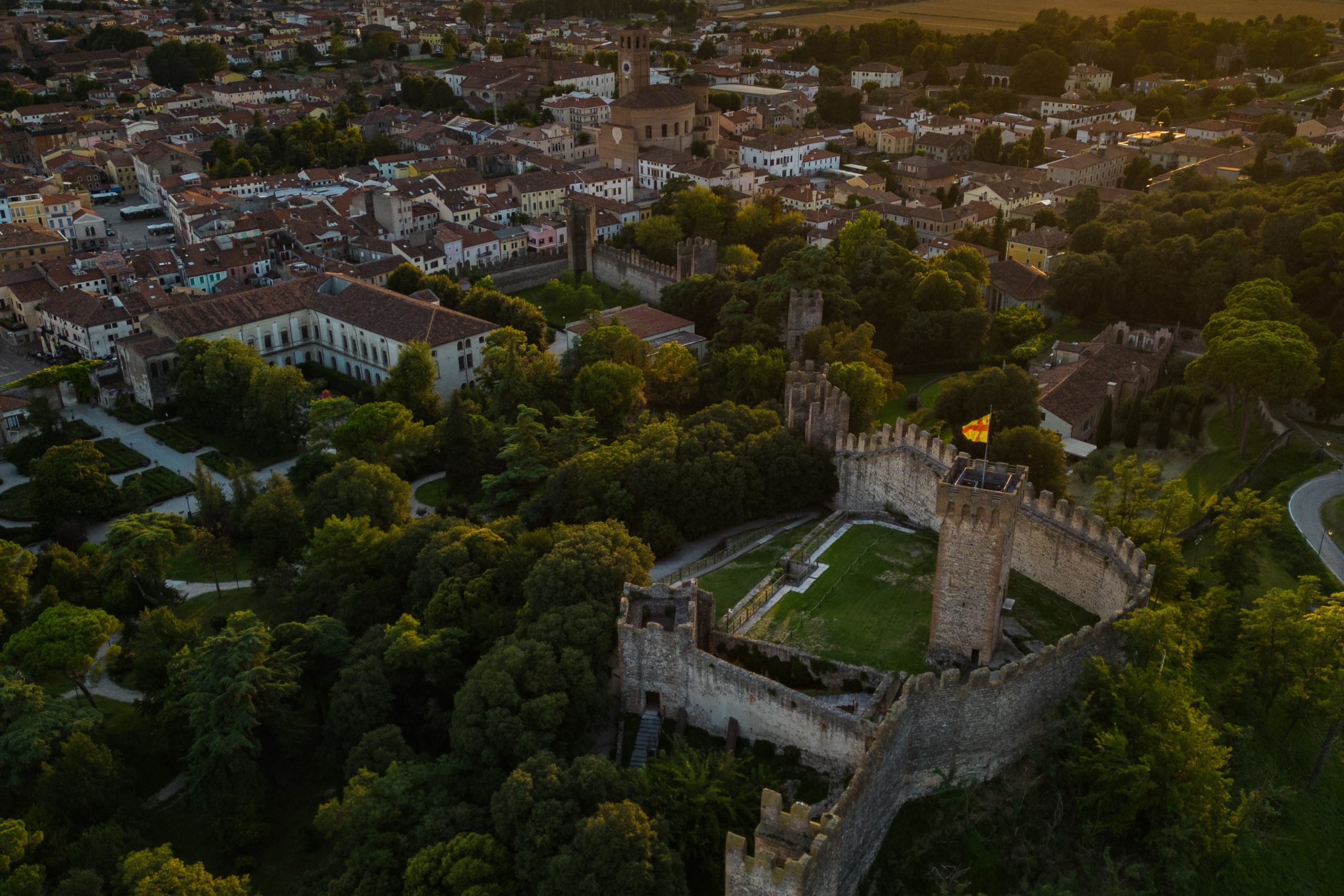
In the heart of Italy’s Veneto region, just a short drive from Padua and within easy reach of Venice, lies a destination that surprises almost everyone who discovers it for the first time: the Euganean Hills.
This unique landscape combines rolling green hills, vineyards and olive groves, medieval villages, historic villas and castles, thermal springs and outstanding local food and wine. It is a place where nature, history and the traditions of Veneto come together in a remarkably compact area.
For travelers exploring northern Italy, the Euganean Hills offer something increasingly rare: a chance to slow down and experience a quieter, more authentic side of Veneto, away from the crowds of its most famous cities.
And their story begins much deeper than the landscape you see today.
Before we begin: Did you know the Euganean Hills are volcanic?
Millions of years ago, volcanic eruptions and lava flows shaped the hills that rise dramatically from the surrounding Venetian plain. That ancient volcanic activity left behind a remarkable variety of rocks, soils, elevations and microclimates. These geological differences have helped shape everything from the local vegetation and landscape to the vineyards and olive groves that cover the hillsides. The area’s geology is also connected to the thermal waters of Abano and Montegrotto Terme, which have made the Euganean Hills one of Italy’s best-known wellness destinations. Today, the Euganean Hills Regional Park, established in 1989, protects and promotes the area’s natural, scenic and cultural heritage, preserving the delicate balance between forests, agricultural land, vineyards, olive groves and historic villages. It is this extraordinary geological history that gives the Euganean Hills their distinctive character.
What makes the Euganean Hills special?
The beauty of the Euganean Hills lies in the extraordinary variety of experiences concentrated within a relatively small area. In the space of a few miles, you can hike through forests, cycle among vineyards, explore medieval villages, visit historic villas, taste local wines, relax in thermal waters and enjoy traditional Veneto cuisine.
You don’t have to choose between nature, culture, food and wellness. Here, they are all part of the same journey.
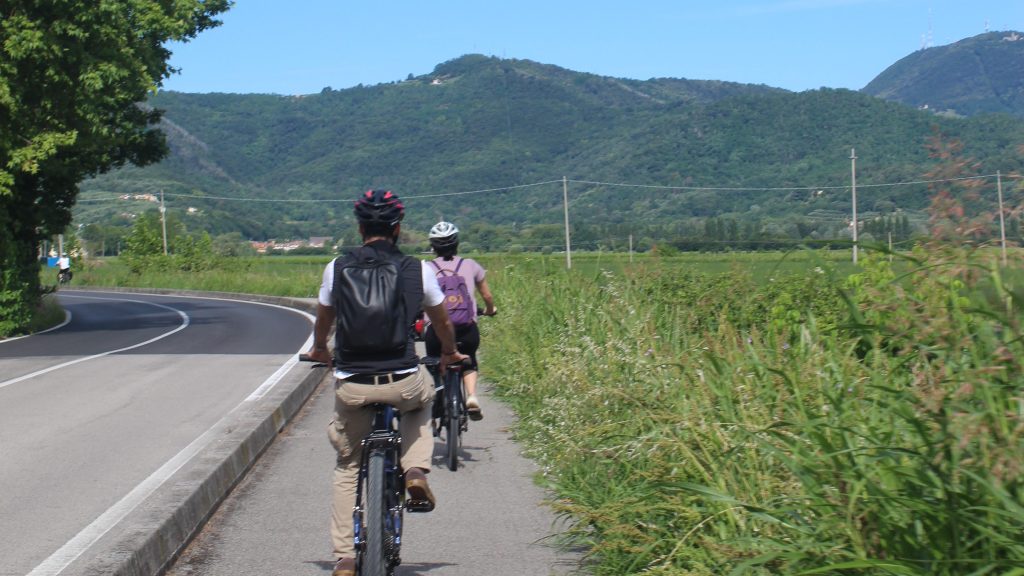
Nature: forests, vineyards and scenic trails
The unique shape of the hills and their varied climate create a surprising mosaic of landscapes. Cooler woodland areas are home to oak and chestnut trees, while the warmer, sunnier slopes support plants more commonly associated with Mediterranean environments, including holm oaks, strawberry trees, heather and broom.
Vineyards and olive groves complete the landscape, together with meadows filled with wildflowers and wild orchids. The result is a destination made for travelers who enjoy discovering a place at a slower pace.
A network of hiking trails crosses forests, vineyards and hillsides, offering routes ranging from gentle walks to more challenging hikes. Cyclists can explore the Euganean Hills Ring, together with its many variations, passing through villages, vineyards and landscapes shaped by centuries of history.
This is Italy at its most enjoyable: a landscape to experience rather than simply photograph.

Thermal wellness: where water, earth and time come together
At the heart of the Euganean Hills, thermal water tells a story that began thousands of years ago.
Rainwater slowly travels deep underground through the rocks of the area, becoming naturally enriched with mineral salts before emerging at the springs of Abano and Montegrotto Terme.
This extraordinary natural resource, together with a centuries-old tradition of thermal mud treatments, has made the Euganean spa district one of Europe’s renowned destinations for wellness.
Thermal water fills pools and wellness facilities, while Euganean thermal mud is matured for months in contact with the thermal water. This carefully controlled process gives the mud distinctive biological properties, including components that scientific research has associated with anti-inflammatory activity and that underpin its traditional use in thermal treatments.
It is the combination of water, earth, heat and time that makes the Euganean thermal experience so distinctive — and so deeply connected to the landscape that surrounds it.
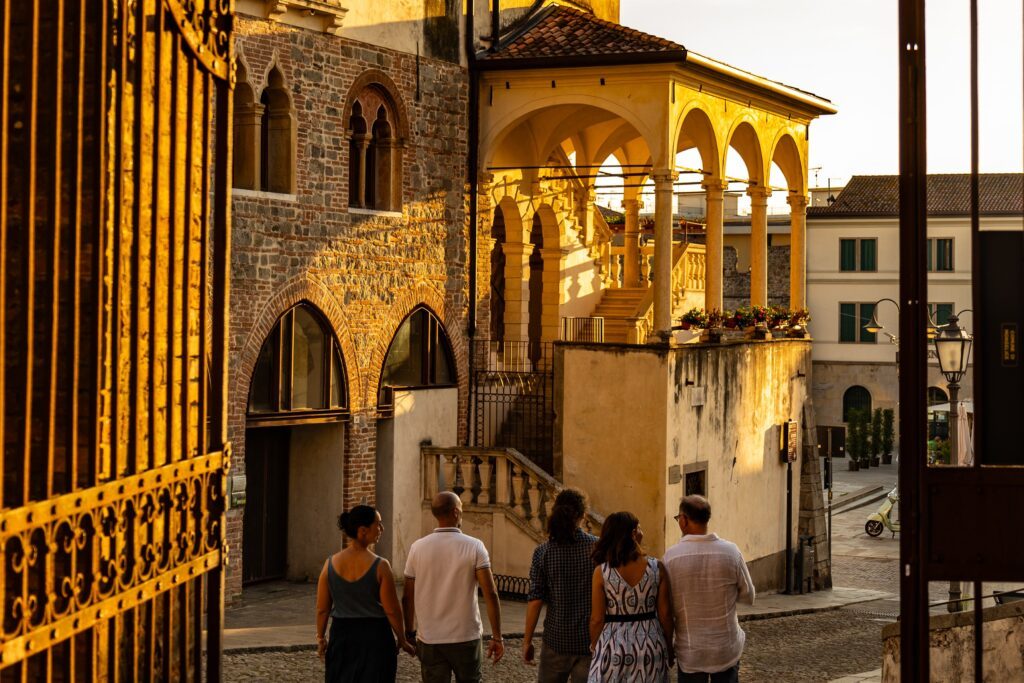
Art and history: castles, villas and medieval villages
The Euganean Hills may be a destination for nature and wellness, but they are also a fascinating place for anyone interested in Italian history and architecture.
Medieval castles, Venetian villas, abbeys and historic villages are scattered throughout the hills, often surrounded by vineyards, gardens and woodland. In Arquà Petrarca, one of Italy’s most beautiful hill towns, you can discover the places associated with the final years of the poet Francesco Petrarch. In Monselice, a historic fortified town, the medieval castle and hilltop complex tell the story of centuries of Venetian history. Este, meanwhile, is one of the area’s most important historic towns, with its castle, old town and long connection to the Este dynasty.
The Euganean Hills are also home to elegant country villas built between the Renaissance and the eighteenth century as retreats for noble Venetian and Paduan families. Surrounded by gardens, parks and vineyards, these residences offer a glimpse into the refined country life of Italy’s aristocracy. Among the most fascinating examples are Villa dei Vescovi in Luvigliano, Villa Selvatico in Battaglia Terme and Castello del Catajo.
Exploring these places is one of the pleasures of traveling through the Euganean Hills: history is not confined to a museum, but appears naturally along the road, in a village square, behind a vineyard or at the end of a garden.
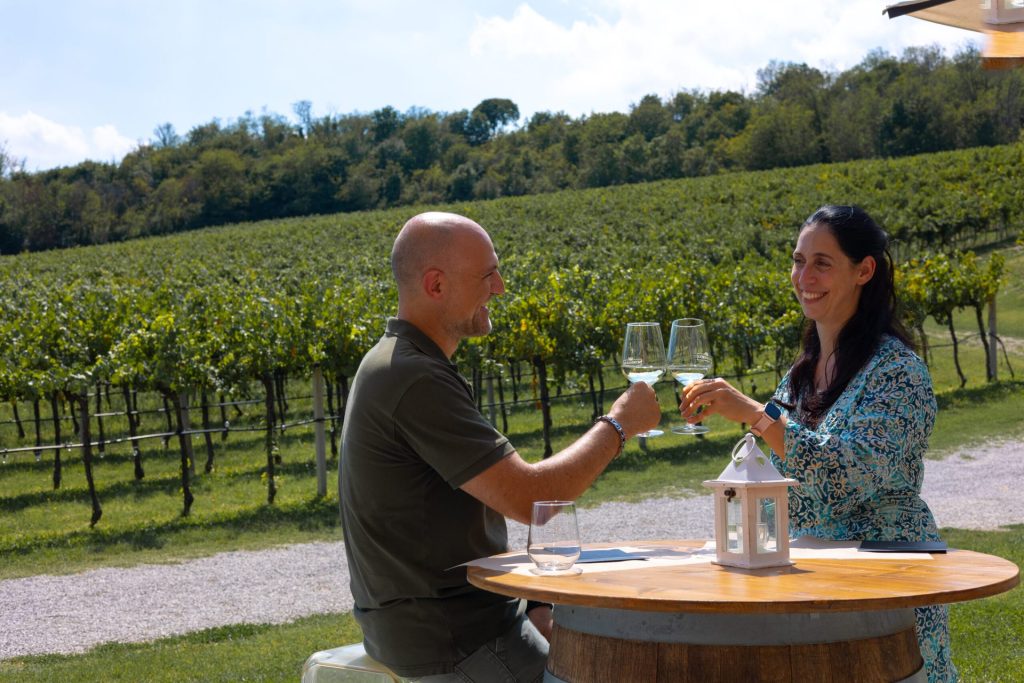
Wine and terroir: the taste of a volcanic landscape
The Euganean Hills are also a destination for wine lovers.
Here, vineyards grow on a landscape shaped by ancient volcanic activity, with different types of rock, soils, elevations, exposures and microclimates creating a remarkable variety of growing conditions. That diversity is reflected in the wines.
One of the area’s most distinctive wines is Serprino, a fresh, lightly sparkling white wine made from Serprina, a local biotype related to Glera. The hills also produce expressive red wines, including wines based on Merlot, Cabernet Sauvignon and Carmenere. And then there is Fior d’Arancio, made from Moscato Giallo and one of the signature wines of the Euganean Hills. It can be found in sparkling and dessert styles and holds DOCG status.
Wine here is not simply something to taste. It is a way to understand the landscape.
A visit to a local winery can take you from the vineyard to the cellar and finally to the table, where wines are paired with regional products and traditional dishes. The result is an experience that connects geology, agriculture, people and food — all in a single glass.

To truly understand a destination, it is not enough to pass through it.
You have to connect with it.
Since 2016, Lovivo Tour Experience has been creating authentic ways to discover the Euganean Hills through the people, traditions and places that make this corner of Veneto unique.
Our experiences go beyond sightseeing, bringing together local wine and food, nature, culture, history and wellness.
Taste wines directly with local producers. Discover historic villages and elegant Venetian villas. Explore the hills by bike or on foot. Meet the people who continue the traditions that have shaped this landscape for generations.
Because the best way to discover the Euganean Hills is not simply to see them.
It’s to experience them.
Discover Lovivo’s experiences in the Euganean Hills and explore a different side of Veneto. Read our article: Unexpected Experiences Near Venice: Discover the Euganean Hills.
