Are you planning a vacation in Venice, and in addition to the splendid lagoon city, would you also like to visit the nearby wonders on the mainland? Take the train to the Terme-Euganee-Abano-Montegrotto station and hop aboard our minivan for wonderful adventures. Here are our recommendations for some stress-free trips!
1. Live Padua as a local, a walking tour

Among the best things to do in and around Padua is definitely a walking tour of the city to discover the real Padua, the one of hidden alleys and postcard views. During a walk of about 2.5 hours, you won’t miss stops at the city’s most important squares and monuments and a pleasant stop for a typical Paduan tasting. You will cross the Prato della Valle, the largest square in the city of Padua and among the largest in Europe. You’ll reach the Basilica of St. Anthony or “The Saint”, a romantic blend of styles and cultures from all corners of the world that houses the relics of the Franciscan monk Anthony, who died in Padua in 1231 and was declared a saint as early as the following year. You’ll stroll along the cobblestone streets and medieval porticoes reaching the beating heart of the historic center, arriving at the Old Ghetto, which with its narrow streets and small cafes has become the gathering place for young students at the University of Padua. You will then reach Piazza delle Erbe and Piazza della Frutta enlivened by the local market stalls and the swarming of people in Sotto Salone, the city’s old covered market. You’ll continue to Piazza dei Signori, now the meeting place of Paduans for the ritual of the aperitif. You will admire Palazzo Bo, home of the University of Padua, founded in 1222, which has always attracted students from all over the world. At the end you can enjoy a Paduan tasting, either a typical aperitif at the old covered market stores or the famous mint coffee at the historic Caffè Pedrocchi.
For further information and booking: Live Padua as a Local
2. A tasting tour in Padua

Things to do in and around Padua include discovering Padua’s food and wine tradition with a tasting tour among the city’s historic establishments. Respecting the seasonality of the food, a local tour leader will guide you on an itinerary full of tastings among the city’s best places, bars and pastry shops. An unmissable stop on the tour will be Sotto Salone, the historic covered market that in its eight centuries of history has become one of the symbols of the city of Padua. Located between Padua’s central squares, Piazza delle Erbe and Piazza della Frutta, the Sotto Salone is part of the Palazzo della Ragione (1218), one of the places in Padua that has been awarded UNESCO World Heritage status in July 2021. In the covered market, spread over two arcades, you will find a series of small stores selling local food and drinks: such as cheeses, cold cuts, fish, meat, fruits, vegetables, fresh pasta and wines. Here you can sample Padua’s culinary specialties and enjoy a spritz while chatting with the friendly and helpful store owners who enliven this temple of taste and immortal traditions.
For further information and bookings: Tasting tour in Padua
3. Oil and Wine Tour

If among the experiences to do in and around Padua you are looking for a food and wine activity outside the heart of the city, the oil and wine tour might be the right choice for you! Located about a twenty-minute drive from Padua, the Euganean Hills area is known for its cultivation of vines and olive trees and for producing culinary excellences such as extra virgin DOP olive oil and DOC and DOCG wines. The first stop on the tour will be a local olive oil mill, where the young owners will directly show you the art of oil production and engage you in a tasting of their products. The second stop will be one of the best wineries in the Euganean area where, after a walk through the vineyards and a visit to the barrel cellar, a tasting of four glasses of wine awaits you, guided by the knowledgeable winemakers who will help you capture all the expressions of their excellence. The particular volcanic origin of the soil and the favorable climate of the Euganean Hills allow the cultivation of a variety of vines: among the whites, Serprino, a biotype of the Glera vine, considered the “volcanic” version of Prosecco, but also Pinot bianco, Garganega and Chardonnay; among the reds, the Bordeaux-style Cabernet Franc, Cabernet Sauvignon, Merlot and Carmènere.
For further information and booking: Oil and Wine Tour on the Euganean Hills
4. Tour of the Villas and Castles of the Euganean Hills
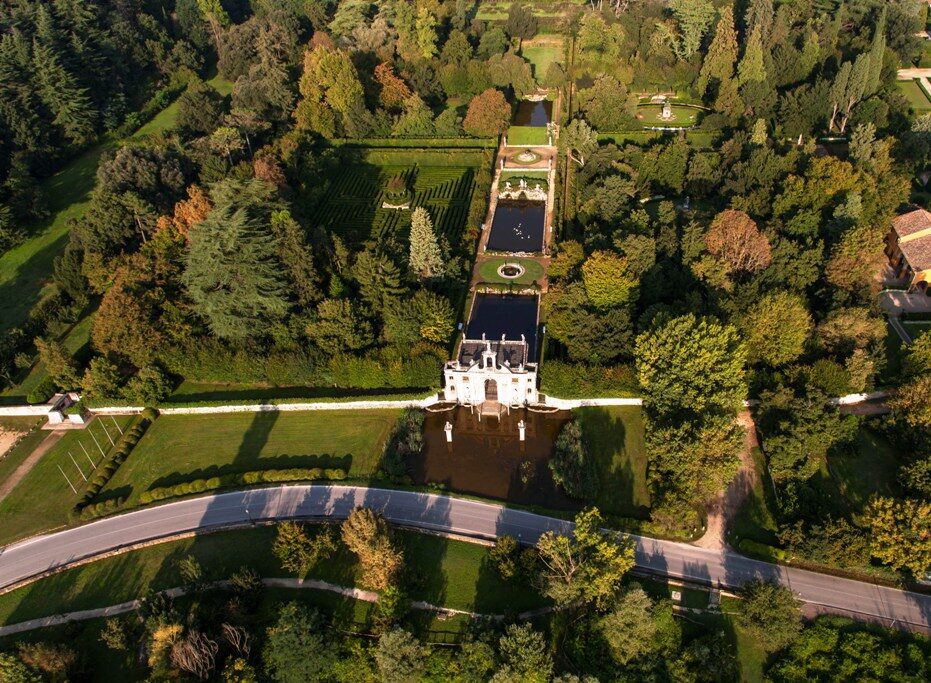
If you are an art lover, among the experiences to be had in and around Padua you can be amazed by the beauty hidden in the Euganean Hills area. Reachable in only 20 minutes by car from Padua, it was chosen from the Middle Ages and later by many Venetian patricians for the construction of defensive sites and sumptuous residences, the latter, oases of tranquility but at the same time an expression of the economic power of the owner families. Here, hidden among the rolling hills are numerous castles, gardens and Venetian villas in perfect condition, enclosing wonders unknown to most. With the Euganean Hills Villas and Castles tour, you will have the opportunity to visit two of these wonderful historic mansions:
The Monumental Garden of Valsanzibio: Winner of Italy’s Most Beautiful Park Award, the Monumental Garden of Valsanzibio was conceived in the 17th century by architect and fountainmaker Luigi Bernini, and is considered the most significant example of a symbolic garden of the 17th century. Here, in fact, water features, tree-lined avenues, fountains, an intricate labyrinth and statues are harmoniously united in an allegorical path of “Salvification” along which the visitor, going through various stages, from the Portal of Diana to the Statue of Winged Time to the Dolphin Fountain, is guided in the symbolic deliverance from sins.
Villa dei Vescovi: An ancient holiday residence of the high prelates of Padua, Villa dei Vescovi dates back to the first half of the 16th century and features noble rooms: bedrooms, lounges, and salons frescoed with bucolic motifs by Lambert Sustris. Admire the profile of the Euganean Hills through the great arches of the loggias and hanging courtyard and be enchanted by the harmony that unites paintings and landscape.
Cini Castle: The most illustrious monument of the walled city of Monselice, Cini Castle appears as a complex of buildings constructed between the 11th and 16th centuries. In the 13th century it was the seat of government of Ezzelino Da Romano, the infamous Ghibelline tyrant; in the 15th century it was the residence of the noble Venetian Marcello family and later the home of Count Vittorio Cini, who restored it to splendor after a period of decay. Inside you can admire 14th-century kitchens and halls in perfect condition, along with the second richest collection of medieval weapons in the Veneto region.
Villa Selvatico: The 17th-century Villa Selvatico, in its noble rooms, houses a cycle of frescoes by painter Luca Ferrari, dedicated to the mythical founder of the city of Padua, Antenore, and a canvas by Alessandro Varotari, known as il Padovanino, representing the Glory of the Selvatico family. The Villa has a monumental staircase of 144 steps and a wonderful spa garden designed by Giuseppe Jappelli, a very famous architect from Padua.
Catajo Castle: The majestic residence of Catajo Castle is located in Battaglia Terme, and was built in the late 16th century by the Obizzi family of powerful captains of fortune, based on an older, more modest building. Over the centuries the structure was relentlessly expanded to its present 350 rooms, some of which were beautifully decorated by Giovanni Battista Zelotti, a pupil of Veronese, with a cycle of frescoes telling the story of the powerful patron family.
For further information and booking: Tour to the Villas and Castles of the Euganean Hills
5. Tour to the medieval town of Arquà Petrarca

If you are looking for a break from the hectic city life, among the things to do around Padua you can enjoy a tour to the placid village of Arquà Petrarca! Voted the second most beautiful village in Italy in 2017, Arquà is located at the feet of Mount Piccolo and Mount Ventolone in the heart of the Euganean Hills Regional Park. A place of enchantment for the tranquility of its historic center and the panorama formed by the rolling hills, it was chosen by the illustrious poet Francesco Petrarca (Francis Petrarch) as his home in the last years of his life. With this experience you will stroll through the village’s characteristic narrow streets and visit the House of Petrarch while admiring the 16th-century frescoes illustrating scenes from the poet’s life and works. The village of Arquà Petrarca has also always been the cradle of an excellent food and wine tradition. Here you can visit a small traditional store of Venetian delicacies and taste the famous Brodo di Giuggiole, Arquà Petrarca’s typical liqueur, accompanied by the wise tales of the owner. Finally, your friendly tour leader will take you to a well-known olive oil mill, where the owners will reveal the secrets of the EVO oil production process and guide you through a tasting of different varieties of their specialties.
For further information and booking: The medieval town of Arquà Petrarca
6. A day trip between Verona and Lake Garda

Do you feel like indulging in romance and a little relaxation? Just an hour’s drive from Padua are the city of love, Verona, and the eastern shore of Lake Garda. This 8-hour tour, will take you first to Verona to visit the historic center and then to Lazise for a relaxing stroll along the shores of Lake Garda. The tour of Verona will start from Piazza Bra, where you will admire the imposing Verona Arena, a longtime destination for Opera fans. Then follow Via Mazzini, a famous shopping street, to Juliet’s House, a building of 13th-century origin and legendary home of the Capulet family. You will continue your walk towards Piazza delle Erbe, Piazza dei Signori, Porta Borsari and the Arche Scaligere, until you reach the Ponte di Pietra and, from here, if you wish, you can take the funicular railway and reach San Pietro hill for a panoramic view of the city. After a short lunch stop, you will reach Lazise on Lake Garda. Here you can enjoy a relaxing walk immersed in history. Of Roman origins, Lazise today appears to be a small village characterized by walls, castle, gates and narrow streets with a clear medieval feel.
For further information and booking: Tour to Verona and Lake Garda
7. Tour to Chioggia

Want to get away from mass tourism and enjoy a relaxing afternoon in a small town with maritime origins? Among the things to do around Padua is Chioggia, “the Little Venice,” a city full of canals, bridges, calli and pastel-colored houses with typical green balconies but without the crowds of tourists or gondolas. The black silhouettes that ply the canals of Venice are here replaced by colorful bragozzi, typical Upper Adriatic fishing boats characterized by brightly hued sails. You’ll make your entrance to the Renaissance heart of the city by crossing Porta Garibaldi, a fortress built around 1300 that welcomes those arriving in Chioggia to immerse themselves in a stroll through history, crossing the 9 bridges of the Vena Canal and discovering imposing palaces and historic facades reminiscent of those in Venice. Among the monuments to visit are numerous buildings of worship: from the Cathedral of Santa Maria Assunta, which houses an extraordinary 1617-pipe Callido organ, to the elegant little temple of San Martino with its octagonal dome, to the Church of San Francesco, built in the 1400s and restored in the 1700s with the addition of a rich vestment of stucco and decorations. Continuing on, next to the Church of St. Andrew, you will glimpse the Clock Tower that supports the oldest working tower clock in the world. Finally, you won’t want to miss a stop at the Vigo Bridge, the city’s balcony: built in 1685 and still proudly guarded by Istrian stone lions. At the end of your walk through the old town, a relaxing boat tour awaits you. You will board a motorboat that will take you through the city’s main canals, the Darsene (docks) and the natural oases of the Venetian lagoon, discovering the secrets of Chioggia’s fisheries, the story of the Madonna protector of Fishermen and much more.
For further information and booking: Tour to Chioggia
8. The Venetian Villas of the Brenta Riviera

Let yourself be surprised by the Venetian splendor! Surrounding Padua is the Riviera del Brenta, a well-known waterway between Padua and Venice; it is a scenic area of historical, natural, artistic, and cultural interest. French and Russian royal families stayed here, as well as the Habsburgs, Savoy, and even Napoleon. It was especially the Venetian nobility who chose the Riviera as their favorite home, transforming the Brenta waterfront into a land dotted with more than a hundred Venetian villas, unique architectural jewels. On the minivan ride you will pass through the river town of Dolo, which with its characteristic houses and ancient mill, built in the first half of the 16th century and immortalized in a famous painting by Canaletto, still represents one of the most striking views of the Riviera del Brenta. The tour stops will be two villas among:
Barchessa Valmarana: Built as a sumptuous aristocratic residence in the 1600s and finely restored by sculptor Luciano Minguzzi in the second half of the 1900s, Villa Valmarana now includes the sumptuous rooms of the Barchessa and the lush gardens that surround it.
Villa Widmann: Built in the early 18th century at the behest of the Seriman family, Venetian nobles of Persian origin, the Villa achieved its present form only in the middle of the same century, when the Widmann family, after purchasing the property, modernized it by adapting it to French Rococo taste. The main body thus became a welcoming home for parties and receptions. Two artists, then much sought-after in Venetian circles, Giuseppe Angeli (1712-1798), a disciple of Giambattista Piazzetta, and Gerolamo Mengozzi Colonna, a favorite collaborator of Tiepolo, were called to embellish the main hall in about 1865.
Villa Pisani in Stra: the most impressive and visited villa on the Riviera. It was built to celebrate the glory of the Pisani family when Alvise Pisani was elected doge in 1735. After the end of the Serenissima, it was owned first by Napoleon, and after its fall in 1814 by the Imperial Hapsburg family. When Venice joined the Kingdom of Italy in 1866, Victor Emmanuel II stayed there for a short time, and two years later it became state property. Since the late 1800s it has been a National Museum. Here you will admire the thirty rooms on the main floor where frescoes, paintings and original furniture from the 18th century are preserved. Life in the villa, dedicated to play and dancing, is depicted in the frescoes celebrating the god of wine and music, the relationships between ladies and knights in Casanova’s century. In the ballroom located in the center of the building, you can admire the Glory of the Pisani family, frescoed by Giambattista Tiepolo, a masterpiece saved by a miracle, since in the early 19th century it was about to be removed as part of the grandiose project to modernize the building commissioned by the viceroy of Italy Eugene de Beauharnais, owner of the complex between 1807 and 1814.
For further information and booking: The Venetian Villas of the Brenta Riviera
9. Wine tour on the Euganean Hills

If you are in Padua, want to explore its surroundings and are a wine lover then you should join our Wine Tour on the Euganean Hills to try unexpected flavors!
The tour dedicated to wine tasting in the Euganean Hills, will take you to discover these hills of volcanic origin in the surroundings of Padua, which rise to heights of 300m to 600m from the Po Valley. You will enter the heart of the Euganean Hills Regional Park to discover, thanks to a visit to two renowned wineries in the Euganean territory, the best wine production in the area. In the Euganean lands in fact, the particular volcanic origin of the soil and the good climate allow the cultivation of various grape varieties. Among white wines for example, Serprino (biotype of the Glera grape variety) which we can say is the “volcanic version” of Prosecco; Pinot bianco; Garganega, Chardonnay and finally Manzoni. While wines such as Cabernet Franc, Cabernet Sauvignon, Merlot and Carmènere have found their place among the local reds. During the walk through the vineyards, the visit to the barrel cellar and the two wine tastings, you will listen to the winemaker’s knowledgeable narrative as he guides you through the tasting to capture all the expressions of his best wines.
For further information and booking: Wine tour on the Euganean Hills
10. Tour to Monselice

If you want to explore Paduas’ surroundings and are passionate about history, you cannot miss a visit to Monselice! This town, which is only 30 minutes by car from Padua, still retains the typical atmosphere of a medieval village, set in the picturesque landscape of the Euganean Hills. The experience of discovering the walled city of Monselice, starts from the Cini Castle, a treasure chest inside which are hidden ancient weapons, chests, valuable tapestries and splendid period furnishings from all over Italy. You’ll hear the history of this fascinating place, imagining how its ancient inhabitants lived and enjoying unexpected glimpses of enchanting gardens. The Carraresi, the Scaligeri, the Visconti, and the Este, are some of the famous lords who contended for its possession, whose spirits are said to still hover among the rooms of the ancient manor. You will continue your discovery of the walled city of Monselice by ascending along what has been called the most beautiful promenade in the Veneto, the Via del Santuario Jubilee Route, with its famous Seven Little Churches that recall the Seven Basilicas of Rome and are still a popular pilgrimage destination for devotees from all over Europe.The short route is full of vantage points from which to admire the walled city of Monselice from above, surrounded by the splendid Villa Duodo that stands atop the Colle della Rocca. To finish, you’ll reach the heart of the Euganean Hills for a visit to a renowned oil mill, where the young owners themselves will show you the art of oil production and engage you in a tasty tasting of extra virgin olive oil.
For further information and booking: The walled town of Monselice
11. Tour to the Conegliano and Valdobbiadene Hills with Prosecco Tasting

If you are a lover of Prosecco and breathtaking views, you can’t miss this experience! The Prosecco Hills tour will take you to the upper Marca Trevigiana, just over an hour’s drive from Padua, along the natural amphitheater that opens between Conegliano and Valdobbiadene. In these lands everything smells of wine and good flavors, of a centuries-old winemaking culture that has deeply characterized the landscape and the soul of one of Italy’s most enchanting areas. The area of Valdobbiadene and Prosecco DOCG is characterized by a particular geomorphological conformation built by a series of reliefs interspersed with small valleys parallel to each other. In this difficult environment, man has been able to adapt over the centuries, shaping the steep slopes and perfecting his agricultural techniques. The work of winegrowers has contributed to the creation of a unique scenery, a true cultural landscape, which in 2019 was recognized as a UNESCO World Heritage Site. The tour includes a visit to enchanting places such as the Molinetto della Croda and the Cistercian Abbey of Santa Maria di Follina, two of the most evocative corners of the Marca Trevigiana. For lunch we will visit a family-run winery for a wine tasting paired with typical local products: a must stop to learn about production methods and taste the excellence of the area. Finally we will stop at a second winery to end the day toasting with a glass of the prestigious Cartizze, or one of the most renowned types of Prosecco.
For further information and booking: Tour to the Prosecco Hills
12. Tour to Treviso with Tiramisù tasting

The tour in Treviso will take you to the heart of the city, the small area of the historic center that holds a monumental and artistic heritage of great value. The walk will begin in Piazza dei Signori where the city’s most important monuments stand: the Palazzo del Podestà or Government Palace with the Civic Tower, the Palazzo dei Trecento, and the Loggia dei Cavalieri. Continuing on you can visit the churches, rich in frescoes, canvases and sculptures, and discover the splendid characteristic corners of the Pescheria and Canale dei Buranelli. You will be able to admire the architecture reflected in canals and resurgences and the frescoes on the facades of ancient and charming mansions. Dulcis in fundo, the final stop of our trip will be a tasting of Tiramisu, the famous dessert, which was born here in Treviso.
For further information and booking: Tour to Treviso
13. Tour to Cittadella
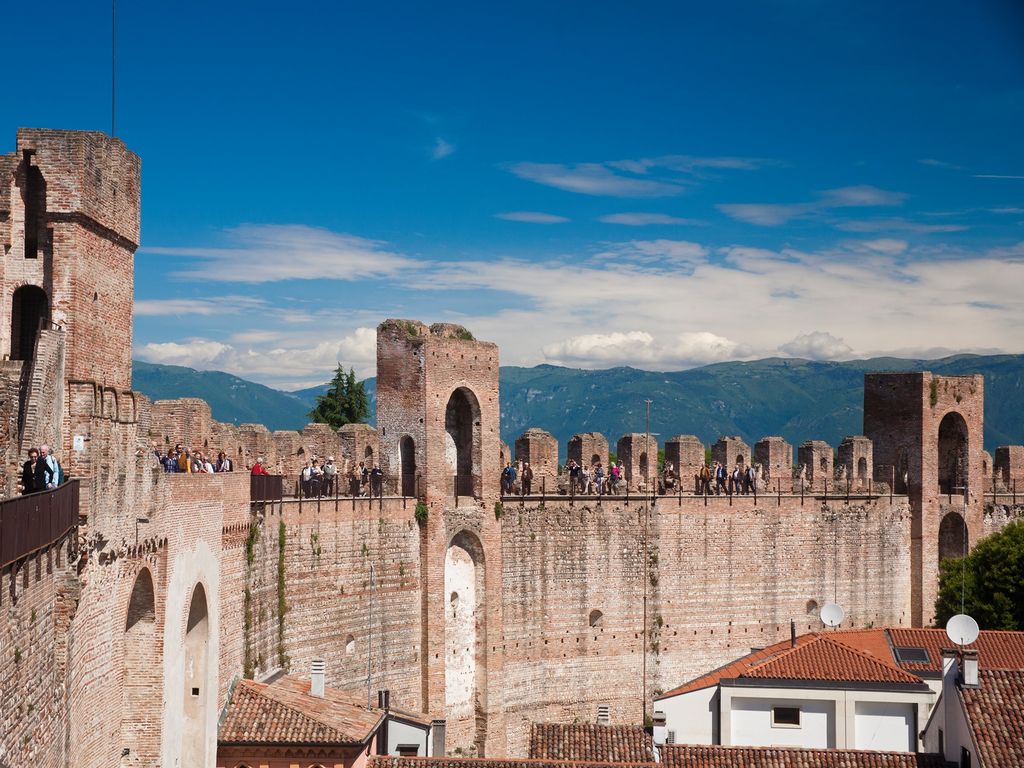
Visit Cittadella to discover one of Veneto’s walled cities, the only one in Europe with a fully walkable and well-preserved patrol walkway. The earliest foundations of Cittadella’s city walls date back to the 3rd century when the Romans erected the ancient walls along the Roman road Postumia, an important artery that connected Aquileia with Genoa across all of northern Italy. Then between the 12th and 13th centuries, when the expansionist aims of powerful Padua brought it into conflict with Treviso and Vicenza, the Paduans decided to fortify it with a massive defensive wall. Together we will walk the walkway the walls that in the Middle Ages, were insurmountable limit for militias everywhere. They have an average thickness of 2.10 meters and four access gates at the four cardinal points, identified by the city gates: Porta Padovana, Porta Bassanese, Porta Trevisana and Porta Vicentina, all of which turn to the city from which they take their name. You will enjoy the view from above over the city, just as the militia used to do during their guard duty in medieval times. As you descend into the center, step by step, you will then admire the city’s important monuments: the Casa del Capitano, where the Captain of the Guards resided, with original frescoes inside dating back to the 16th century;the Tower of Malta, whose terrifying tortures at the time of the tyrant Ezzelino III da Romano are recounted, even mentioned by Dante in the Divine Comedy; the Praetorian Palace, the ancient seat of the Potestà of the city of Padua; the Teatro Sociale, whose facade is attributed to the well-known Giuseppe Jappelli; and the Cathedral with the Pinacoteca, which houses works by Palma il Giovane.
For further information and booking: Tour a Cittadella
14. Bassano del Grappa

Bassano del Grappa is a real pearl that will amaze you: the tour begins on a walk to Ponte Vecchio, or the Ponte degli Alpini, a historic symbol of the city, of vital economic and military importance, it was destroyed several times by wartime events and flooding of the Brenta River and always rebuilt, in stone or wood. In the 16th century the famous Venetian architect Andrea Palladio was commissioned with yet another reconstruction. We will continue on a walk to admire the historic center of the city, discovering the remains of the ancient city walls, the Ezzelini Castle, Palazzo Pretorio, Piazza Garibaldi with the Civic Tower, and Palazzo Sturm famous for its splendid collections of ceramics, known for the fineness of the mixture, the richness of the decoration and the brilliance of the glaze. The final mandatory stop will be a historic distillery where you will hear the story of Italy’s most famous distillate: grappa. You will learn about the origins of this pomace (grape skins) distillate, how it was once produced and how it is produced today. Finally you will be guided through a tasting of local grappas.
For further information and booking: Tour to Bassano del Grappa
15. Tour to Vicenza

Vicenza’s golden age began in 1540, when the Venetian aristocracy decided to reorganize the city and its countryside. The task was entrusted to Andrea di Pietro della Gondola, known as Palladio, one of the greatest architects of the time, who designed wonderful private palaces, public buildings and extraordinary villas for historic Vicenza and the surrounding countryside, which in 1994 earned the city designation as a UNESCO site. he tour will begin at the central Piazza dei Signori with its elegant monuments, and we will take a walk through the city, including Corso Palladio, the city’s main street, to the Palazzo Chiericati, designed in 1550 for Girolamo Chiericati, also one of Andrea Palladio’s masterpieces. Embellished with frescoes and stuccoes, the palace features one of Europe’s most prestigious civic collections of paintings, sculpture and applied arts from the 13th to the 20th century. You may choose to visit the Basilica Palladiana, Andrea Palladio’s masterpiece, or the Church of Santa Corona, a splendid Gothic-style church of Dominican foundation that houses numerous sculptural and pictorial works, including Giovanni Bellini’s masterpiece “The Baptism of Christ.” Finally, you will reach the Sanctuary of the Madonna of Monte Berico and admire from the panoramic terrace in front of it a fantastic panorama of the city of Vicenza.
For further information and booking: Tour to Vicenza
16. Wine tour in Valpolicella

If you are a fan of red wines, don’t miss this tour! Enjoy a walk through the beautiful vineyards and rolling hills of Valpolicella and stop at one of the area’s most exclusive wineries for a tasting of the full range of Valpolicella DOC. You’ll discover this land famous worldwide for its DOC reds: from the straightforward Valpolicella Classico with its Superiore version, to the fragrant Ripasso, to the intense Amarone and sweet Recioto.
For further information and booking: Valpolicella wine tour
If you still haven’t found the destination you’ve been looking for, all you have to do is write to us! info@lovivo.it
We are waiting for you on board our minivan!